묻기
제품이 아직 답하지 못하는 질문에서 시작합니다.
Archymedes 연구소
연구소는 제품 아래에 놓인 질문을 연구합니다. AI는 언제 행동해야 하는지, 그것이 아는 것이 현장에서도 사실인지, 어디서나 돌아갈 만큼 저렴하게 만들 수 있는지. 방법, 코드, 한계를 공개합니다.
방법
제품이 아직 답하지 못하는 질문에서 시작합니다.
그럴듯함이 아니라 실제 정답과 비교합니다.
통과하지 못한 것은 아무리 편리해도 뺍니다.
논문, 코드, 데이터, 그리고 명시한 한계를 내놓습니다.
연구 프로그램
아무도 시도하지 않은 일을 AI는 언제 실행해야 할까?
Generative models are good at proposing options and bad at choosing between them. This line of work keeps the two apart: models judge, calibrated maths decides, and an uncertain option is checked against a fallback instead of being vetoed.
성과
현장에서도 사실인가?
Rebuilding real places as verified, lightweight 3D scenes from free public data. Every layer is registered against the best measurement available and its error is reported; a source that fails against the ground is dropped, however convenient.
성과
평범한 하드웨어에서 돌아가는가?
Making capable models cheap enough to run where connections are slow or absent: compression and quantisation for small language models, and tooling that tunes GPU code without trading away correctness.
성과
논문
아무도 시도하지 않은 아이디어를 AI는 언제 실행해야 할까요? 거부하는 대신 되돌릴 수 있는 방식으로 먼저 확인하고, 확인이 놓칠 수 있는 위험까지 계산합니다.
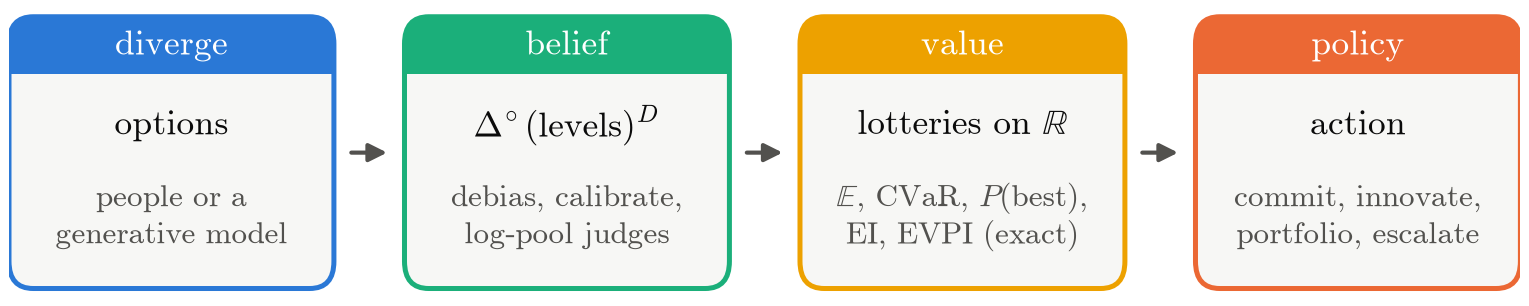
For a single decision, the value of a check depends on the belief about harm only through its mean. Ignorance and a known coin flip warrant the same action; the difference matters for learning across decisions.
On held-out synthetic problems, checking uncertain options halves the regret of vetoing them (0.045 vs. 0.091) at about 1% undetected harm, against 17–23% for acting on them unchecked.
Over 237 TypeSafe Jev judgments with known ground truth, Jev separates explicit harm from explicit safety almost perfectly (AUROC 0.9998), and cdm has the lowest regret and harm of the policies compared.
The gain comes from checking, not from the CVaR reliability gate; the Jev benchmark is small and templated; none of this yet shows better decisions on real outcomes.
기본은 공개
연구소가 공개하는 모든 결과에는 그것을 확인하는 데 필요한 것이 함께 있습니다. 벤치마크가 작거나 데이터가 거칠면 논문에 그렇게 적습니다.